A Comprehensive Guide to Meatball Cuisine – Practical Tips from Selection to Cooking
A Comprehensive Guide to Meatball Cuisine – Practical Tips from Selection to Cooking
Part 1: How to Choose a High-Quality Meatball?
Walking into a supermarket or traditional market, the dazzling array of meatball products can often be overwhelming. How exactly should one choose a truly high-quality meatball? This is not only about deliciousness but also about food safety. As a professional meatball manufacturing brand, Shun Lung Food would like to share some practical tips for selecting meatballs.
First, check the ingredient label. The primary condition for a high-quality meatball is sufficient meat content. To reduce costs, many commercially available meatballs add large amounts of starch, soy protein, or other fillers. Such meatballs taste floury, lack meaty flavor, and have significantly reduced nutritional value. Shun Lung's products, whether beef balls, cuttlefish balls, or pork balls, insist on using meat as the main component, ensuring you get genuine ingredients in every bite.
Second, pay attention to the types of additives. Some meatballs add preservatives, artificial flavors, colors, etc., to extend shelf life or enhance texture. Shun Lung products adhere to the principle of no added animal blood, preservatives, artificial flavors, or colors, preserving the purest flavor of the ingredients. When selecting, take a closer look at the ingredient list and choose products with simple, clearly labeled components.
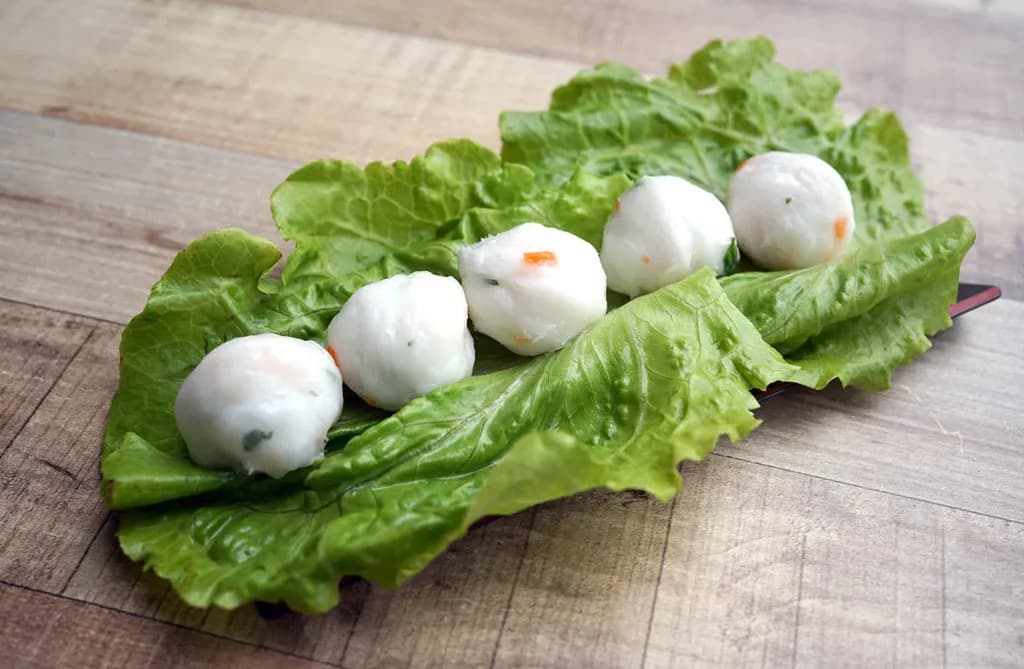
Third, observe the appearance and texture. High-quality handmade beef balls should have a natural luster on the surface, with uniform color, neither too bright nor too dull. For cuttlefish balls or shrimp balls, you should be able to see small seafood particles rather than a completely homogenized paste. Gently press – a good meatball should be elastic and spring back quickly after pressing, not soft or mushy.
Lastly, trust reliable brands. Shun Lung Food has deep roots in the food manufacturing field, strictly following food safety and quality standards throughout the entire process, from strict raw material selection and freshness checks to production processing and finished product inspection. Choosing a brand like Shun Lung that emphasizes quality is an added safeguard for the health of yourself and your family.
Part 2: Proper Storage and Thawing Methods for Meatballs
How should meatballs bought home be stored to maintain their best flavor? This is a common question among consumers. Proper storage and thawing methods ensure the texture and flavor of the meatballs are not compromised.
Regarding Freezer Storage: Shun Lung's meatball products are flash-frozen upon production to lock in freshness. Upon bringing them home, they should be immediately placed in the freezer, maintained at a temperature below -18°C (0°F). It's important to note that temperature fluctuations in the freezer can affect meatball quality, so try to avoid频繁 opening and closing the freezer door, and don't store meatballs on the door shelves, as this area experiences greater temperature variation.
Regarding Portioning for Storage: If you buy a large quantity at once, it's recommended to portion the meatballs according to your typical usage. Divide them into smaller packages, seal them in freezer bags or containers, and then freeze. This has two benefits: first, it avoids quality degradation from repeated thawing and refreezing; second, it's convenient for taking out exactly the amount you need. Products like Shun Lung's beef tendon balls and Wagyu balls are well-suited for this portioning method.
Regarding Thawing Methods: The thawing method directly impacts the texture. The ideal method is to transfer frozen meatballs to the refrigerator and let them thaw slowly for 6-8 hours. This low-temperature slow thawing best preserves the juices and flavor. If time doesn't permit, you can use cold water thawing – submerge the meatballs (in a sealed bag) in a bowl of cold running water; they should thaw in about half an hour. It's important to avoid using a microwave for thawing, as it can easily cause局部 overheating and affect the texture.
Regarding Direct Cooking: Actually, Shun Lung's meatballs offer an even more convenient option – cook them directly without thawing! Whether handmade shrimp balls, hand-pounded cuttlefish balls, or chicken balls, you can take them straight from the freezer and put them into boiling water for soups or stews; just extend the cooking time slightly. This method is most suitable for busy weekdays – quick and convenient.
Part 3: Five Key Secrets for Home-Style Meatball Cooking
After mastering selection and storage techniques, the next step is how to cook meatballs deliciously. Here are five key secrets accumulated over the years in the Shun Lung kitchen, shared with you who love to cook.
Secret 1: For Soup, Start with Cold Water. Many people习惯 to bring water to a boil before adding meatballs when making soup, but this isn't the best method. For a flavorful broth and well-seasoned meatballs, it's recommended to put the meatballs in the pot with cold water and heat slowly to a boil. During this process, the umami from the meatballs gradually releases into the soup, making it richer. This method is particularly effective for highlighting the flavor of beef tendon balls or pork stomach balls.
Secret 2: For Hot Pot, Add Them Last. Contrary to soup making, if you're having hot pot, it's best to add meatballs at the final stage. After various ingredients have been cooked in the hot pot broth, the flavor is at its richest. Adding meatballs at this point allows them to absorb the essence of the broth while maintaining their own texture. Especially for delicately flavored products like Wagyu balls, adding them too early might allow their unique aroma to be masked by the broth.
Secret 3: For Stir-frying or Pan-frying, Thaw and Halve First. If you plan to use meatballs for stir-frying or pan-frying, it's recommended to thaw them completely first, then cut them in half or slice them. This has two benefits: first, it increases the surface area, making it easier to sear in aroma; second, it ensures the meatballs cook through evenly. Shun Lung's cuttlefish balls, sliced and stir-fried with celery, or chicken balls, halved and pan-fried, are both delicious preparations.
Secret 4: For Deep-frying, Control the Oil Temperature. When deep-frying beancurd rolls, controlling the oil temperature is key. An oil temperature of around 160-170°C (320-340°F) is most suitable. Too low, and the beancurd skin will absorb oil and become greasy; too high, and the outside will burn while the inside remains cold. If you don't have a thermometer, you can test with chopsticks – insert a chopstick into the oil; if small bubbles rapidly form around it, the temperature is right.
Secret 5: Creative Pairings Offer Infinite Possibilities. Meatballs are incredibly versatile ingredients. Don't be afraid to think outside the box and try different combinations. For example, flatten pork balls and put them in a burger bun for a Chinese-style burger; chop cuttlefish balls and mix them into fried rice for an extra savory touch; or slice handmade beef balls and toss them with pasta and pesto for a creative East-meets-West dish. As long as you're willing to experiment, meatballs can bring endless surprises.