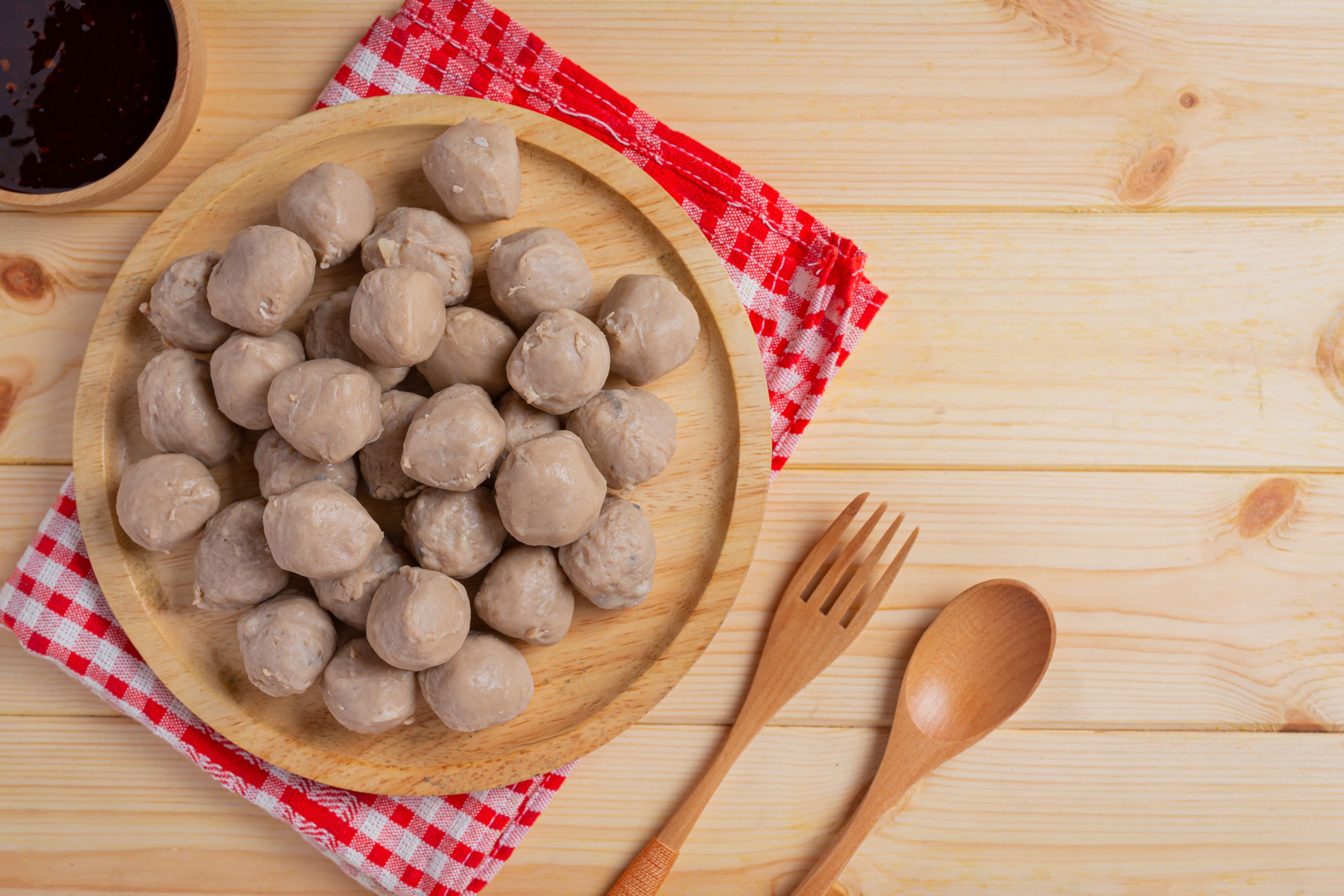
The Infinite Possibilities of Pork Balls – From Home-Style Dishes to Feast-Worthy Delicacies
Among the many types of meatballs, pork balls may not attract as much attention as beef balls, nor are they as celebrated for freshness as seafood balls. However, with their mild, rich flavor and exceptional versatility, they have become the most commonly purchased type of meatball for many families. Shun Lung's pork balls are a prime example of this category.
Part 1: The Basic Craftsmanship and Flavor Code of Pork Balls
Among the many types of meatballs, pork balls may not attract as much attention as beef balls, nor are they as celebrated for freshness as seafood balls. However, with their mild, rich flavor and exceptional versatility, they have become the most commonly purchased type of meatball for many families. Shun Lung's pork balls are a prime example of this category.
The choice of pork is the foundation of flavor. Making a high-quality pork ball starts with selecting the right cut of pork. Pork that is too lean results in dry, tough meatballs; pork that is too fatty makes them greasy. Shun Lung uses pork front leg meat, which is tender with evenly distributed fat. It provides enough lean meat for texture and moderate fat for moisture. After arriving at the factory, the masters carefully remove the sinew and impurities, retaining only the finest parts to prepare for subsequent processes.
The coarseness of the minced meat affects the texture. The texture of pork balls is directly related to how finely the pork is minced. If minced too fine, the meatballs lose their应有的 chewy quality and become pasty; if minced too coarse, they are difficult to form and easily fall apart. Based on years of experience, Shun Lung's masters mince the pork to the optimal coarseness, preserving the fibrous texture of the meat while ensuring the structural integrity of the meatballs. This attention to detail is why Shun Lung pork balls have a firm yet not dry texture.
The minimalist philosophy of seasoning. In terms of seasoning, Shun Lung adheres to a consistent minimalist principle. We use salt, sugar, a little white pepper, and soy sauce as a base to bring out the natural sweetness of the pork, avoiding excessive spices that could mask the ingredient's original flavor. Such pork balls have a pure, authentic pork taste without being overpowering, and they pair well with various ingredients without competing for flavor – making them one of the most versatile ingredients in the kitchen.
The key role of the beating process. After seasoning, the beating process follows. Through appropriate beating and tossing, the proteins in the pork develop stickiness, forming a network structure. This process requires the right amount of force and time – insufficient beating results in meatballs lacking elasticity; excessive beating damages the meat structure, leading to a dry texture. Relying on their experience, Shun Lung's masters precisely control the beating degree for each batch, ensuring every pork ball achieves its optimal state.
Part 2: Versatile Home-Style Dishes with Pork Balls
The charm of pork balls lies in their ability to pair with almost any ingredient and adapt to any cooking method. Here are a few simple yet delicious home-style dishes featuring pork balls, hoping to inspire your daily cooking.
Pork Balls in Tomato Sauce is a very popular home-style dish. Sauté minced garlic and diced onion in oil, add tomato paste and a little broth or water, and cook until the sauce thickens to a适中 consistency. Add thawed pork balls and simmer over low heat for about 8-10 minutes, allowing them to fully absorb the essence of the sauce. Add a little sugar to balance the acidity before serving, and sprinkle with parsley or chopped spring onions. This dish is sweet and sour, appetizing, and pairs well with either rice or pasta, making it especially popular with children.
Chinese Cabbage Stewed Pork Balls is a heartwarming soup. Cut Chinese cabbage into sections and place them in a pot with pork balls and a few slices of ginger. Add enough water, bring to a boil over high heat, then reduce to low heat and simmer for about 20 minutes until the cabbage is soft and the broth turns milky white. Season with salt, sprinkle with a little white pepper and chopped spring onions. This soup is sweet and滋润, with the sweetness of the cabbage blending with the umami of the pork balls – the warmest comfort on a winter day.
Teriyaki-Style Pork Balls suit those who prefer bold flavors. Pan-fry pork balls until golden brown on the surface and set aside. In the same pan, sauté minced garlic and ginger, add soy sauce, mirin, sake, and a little sugar, and cook into a thick sauce. Return the pork balls to the pan and stir-fry to coat evenly. Sprinkle with white sesame seeds and chopped spring onions before serving. The savory-sweet teriyaki pork balls make an excellent accompaniment to rice.
Steamed Egg with Pork Balls is a dish well-suited for families with young children or elderly members. Beat eggs, add about 1.5 times the amount of water or broth, a little salt for seasoning, and strain to remove foam. Halve the pork balls or place them whole in a deep dish, pour in the egg mixture, and steam in an electric cooker or steamer for about 15-20 minutes until the egg is fully set. This dish is soft, easy to eat, and nutritious. The umami of the pork balls seeps into the steamed egg, elevating this simple dish into a delicious main course.
Part 3: The Traditional Flavor and Modern Interpretation of Pork Stomach Balls
Within Shun Lung's pork ball series, Pork Stomach Balls are a product with strong traditional characteristics. They use pork as a base and incorporate properly processed pork stomach, creating a unique flavor and textural layering.
The processing of pork stomach is a critical step. Making pork stomach balls is much more complex than making regular pork balls. First, fresh pork stomach must be repeatedly cleaned – this step is crucial because improperly handled pork stomach will retain an off-odor that directly affects the flavor of the final product. Using traditional methods, Shun Lung's masters repeatedly scrub the stomach with salt and flour, then rinse thoroughly with water to ensure all odors are removed.
The processed pork stomach is then cooked and cut into small, uniform dice. This step also requires skill – dice that are too large will affect the meatball's structure, while those too small won't provide the intended textural layering. The diced pork stomach is then mixed and beaten with fresh pork paste in a specific proportion. The presence of these stomach dice adds a unique chewiness and textural layer to the otherwise firm meatball, allowing you to taste the characteristic savory fragrance and resilience of pork stomach in every bite.
The classic way to enjoy pork stomach balls is undoubtedly in soup. Stewing them with white radish or winter melon requires minimal seasoning; the flavor of the stomach balls slowly permeates the soup, creating a clear yet profoundly rich and heartwarming broth. Especially in Pepper Pork Stomach Ball Soup – adding a few white peppercorns to the stew creates a perfect match between the pepper's slight spiciness and the stomach balls' savory fragrance. Drinking a bowl on a slightly cool day warms you from the stomach to the heart.
A modern interpretation of pork stomach balls can involve trying different pairings. For example, slice the stomach balls and stir-fry them quickly with pickled mustard greens and chili for a sour and spicy flavor; or stew them with mushrooms and bamboo pith fungus for a nourishing and healthful soup. These variations allow traditional pork stomach balls to融入 modern cuisine and showcase new facets.
Part 4: Tips for Storing and Reheating Pork Balls
Due to their moderate fat content, the storage and reheating methods for pork balls directly affect their texture. Here are a few practical tips.
Key points for freezer storage: If you won't be consuming purchased pork balls in the short term, place them in the freezer immediately. It is recommended to portion them according to your intended usage to avoid repeated thawing, which affects quality. When portioning, place the meatballs in freezer bags, squeeze out as much air as possible, seal, and label with the date and product name for easy retrieval later.
Best thawing method: When you plan to use them, it's best to transfer frozen pork balls from the freezer to the refrigerator and thaw slowly for 6-8 hours. This low-temperature slow thawing maximizes the retention of the meatballs' juices and flavor. If you forget to thaw in advance, you can use cold water thawing – submerge the sealed meatballs in a bowl of cold running water; they should thaw in about half an hour. Avoid using a microwave for thawing whenever possible, as it容易 causes localized overheating and affects texture.
Reheating techniques: If you need to reheat already cooked pork balls, steaming is recommended over microwaving. Place the pork balls in an electric cooker or steamer, add a little water to the outer pot, and steam for about 5-8 minutes. Steaming helps retain the meatballs' moisture, avoiding the dryness that can result from microwave heating. If the meatballs are in a soup, simply reheat them together with the broth, allowing them to regain moisture.
Creative use of leftover meatballs: If you have leftover cooked pork balls, you can slice them and stir-fry with vegetables to create a new dish; or crush them and mix into fried rice or noodles to add flavor to ordinary staples. This not only avoids waste but also creates new delicious possibilities.